
As demand for cooling continues to rise worldwide, the choices countries make today will shape how people keep homes, hospitals, schools and food systems cool while limiting greenhouse gas emissions. Climate change continues to drive more frequent and intense weather events, including heatwaves, hence the growth of the demand for cooling. It is no longer a luxury, but a need. Meeting this demand means ensuring that developing countries have access to finance, technologies, knowledge and institutional support needed to advance sustainable cooling.
Adopted in 2016, the Kigali Amendment expanded the scope of the Montreal Protocol, one of the world's most successful environmental agreements, to address hydrofluorocarbons (HFCs), which are powerful greenhouse gases widely used in refrigeration, air conditioning and other cooling applications. Although HFCs do not deplete the ozone layer, many have a high global warming potential. Their global phasedown therefore represents one of the most significant opportunities to slow global warming while supporting the transition to sustainable, climate-friendly cooling.
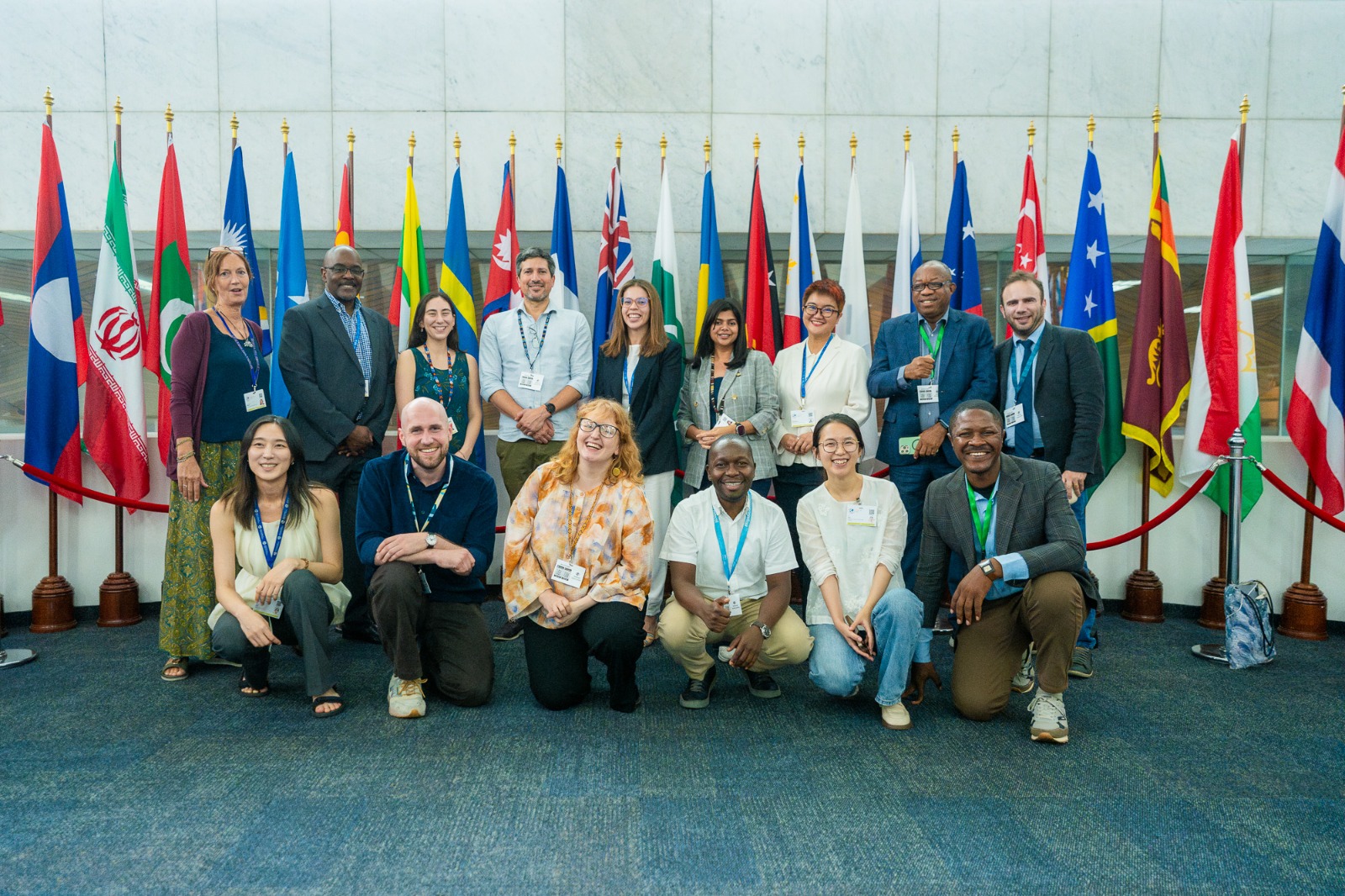
Against this backdrop, the recently concluded 48th Open-ended Working Group (OEWG48) of the Montreal Protocol, held in Bangkok, was key. As the treaty's principal preparatory meeting, OEWG48 brought together Parties, intergovernmental organisations, technical experts, industry, and civil society to review implementation, consider scientific and technical issues, and discuss priorities that will inform decisions at the 38th Meeting of the Parties (MOP38) later this year in Kigali.
For CEJAD, OEWG48 was an important platform to champion solutions that work for Africa and other developing regions.
CEJAD's Priorities for Strengthening Kigali Amendment Implementation
We emphasised that developing countries should have access to predictable financing, affordable climate-friendly technologies, technical expertise and the institutional support needed to implement their commitments effectively:
Financing that matches ambition
Implementing the Kigali Amendment requires significant investment, particularly in developing countries transitioning to climate-friendly cooling. Central to this effort is the Multilateral Fund for the Implementation of the Montreal Protocol, the treaty's financial mechanism, which helps developing countries implement their commitments through technology transfer, institutional strengthening and capacity building. As countries prepare for the Fund's next replenishment cycle, ensuring that it remains adequately resourced will be critical to matching global ambition with effective implementation.
Expanding Access to Sustainable Cooling
Climate-friendly cooling technologies must be both available and affordable. Scaling up energy-efficient cooling solutions, including natural refrigerants where appropriate, can reduce greenhouse gas emissions, lower energy costs, and expand access to sustainable cooling while supporting sustainable development.
Building Technical Capacity
Technology alone cannot deliver the cooling transition. Countries also need trained technicians, customs officers and policymakers with the skills to adopt new technologies, enforce regulations and support implementation safely. Continued investment in technical training and technology transfer will be essential.
Strengthening Implementation
Successfully implementing the Kigali Amendment depends on strong institutions that can turn global commitments into action. National Ozone Units, customs authorities and other government agencies need adequate resources, technical expertise and effective coordination to enforce regulations, monitor progress and support compliance. Digital tools, including electronic licensing and reporting systems, can further strengthen implementation by improving transparency, streamlining data management and helping authorities detect and prevent illegal trade.
Science-driven implementation
Strong science underpins effective policy. Transparent reporting and robust atmospheric monitoring help countries track progress, identify emerging challenges and strengthen accountability under the Montreal Protocol.
Tackling illegal trade
Illegal trade in controlled substances continues to undermine global efforts to protect the ozone layer and combat climate change. Stronger cooperation, institutional capacity and enforcement are essential to safeguard progress and ensure compliance.
Check out our report on Monitoring Instances of Illegal ODS or HFC Trade In The East African Region.
Managing refrigerants throughout their lifecycle
The climate impact of refrigerants extends well beyond their use. Recovering, recycling, reclaiming and safely disposing of refrigerants can significantly reduce emissions and support a more sustainable cooling sector.
Looking Ahead
The 10th anniversary of the Kigali Amendment comes at a defining moment for global climate action. The conversation is no longer simply on securing new international commitments; it is increasingly on ensuring that existing commitments are implemented effectively.
The conversations in Bangkok do not end with OEWG48. They now move to MOP38 in Kigali. For Africa, the opportunity extends beyond reducing HFC emissions. It is about expanding access to sustainable cooling to support public health, food security, economic development, and climate resilience.
CEJAD remains committed to working with partners to turn these discussions into meaningful action and advance a just transition to sustainable cooling, one that is equitable, practical and accessible for developing countries.
Check out a similar blog: