
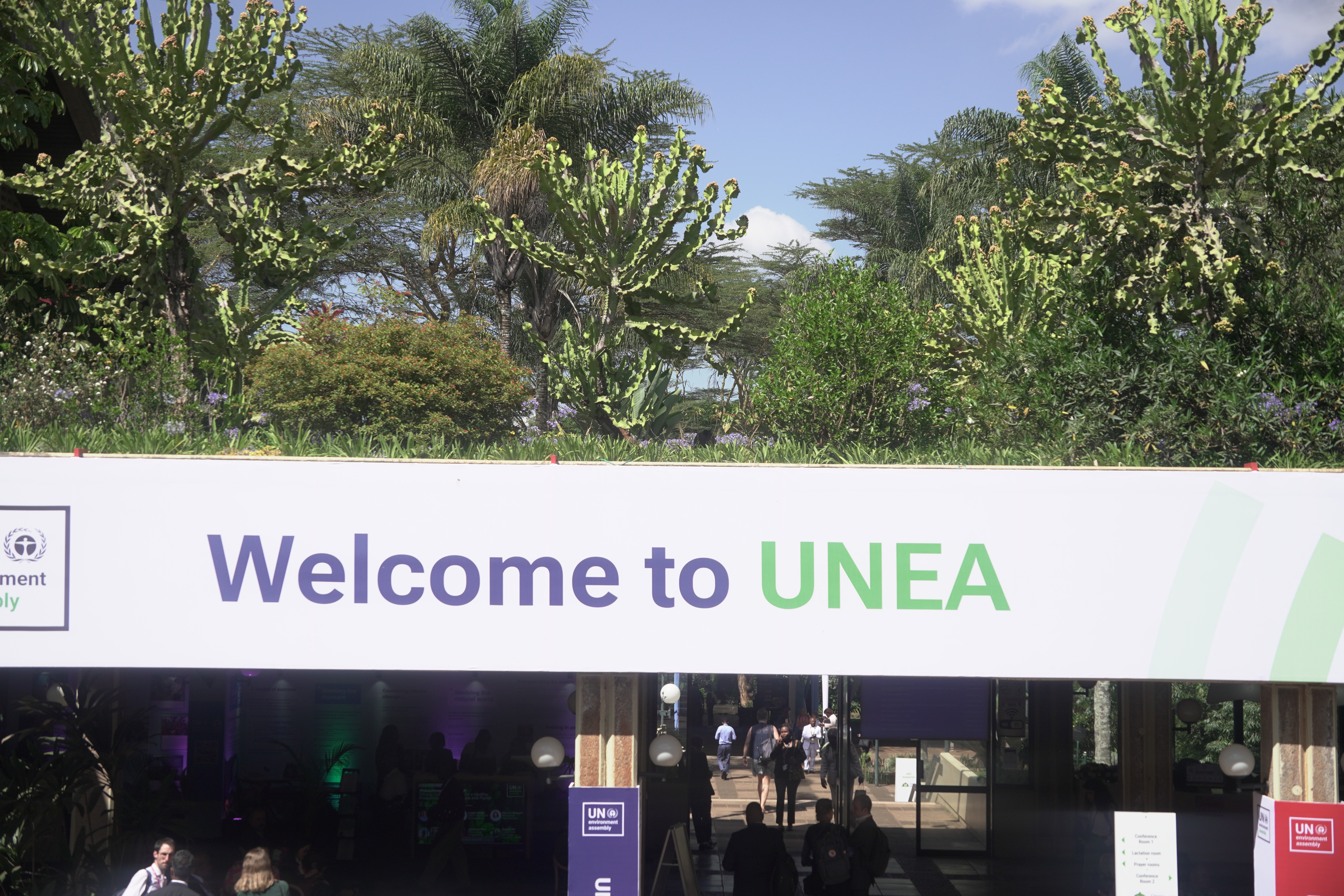
The Centre for Environment Justice and Development (CEJAD) participated in the Seventh Session of the United Nations Environment Assembly (UNEA-7), held in Nairobi from 8–12 December 2025, an important moment for global environmental governance. UNEA-7 brought together leaders from governments, the scientific community, civil society, and international organisations to discuss collective responses to escalating environmental and climate challenges.
Ahead of the Assembly, and on the sidelines of the Seventh Session of the Open-ended Committee of Permanent Representatives (OECPR-7), CEJAD, in partnership with Heinrich Böll Stiftung, convened a side event that brought together policymakers, civil society actors, waste picker representatives, and other practitioners. (READ MORE) The discussion explored how Zero Waste systems, supported by strong regulatory frameworks, can address plastic pollution while advancing a just transition to a non-toxic circular economy.
The side event underscored the need to rethink and redesign products as part of a comprehensive Zero Waste approach, including the elimination of toxic additives and the production of materials that can be safely reused and recovered. It also highlighted the importance of robust Extended Producer Responsibility (EPR) laws, the critical role waste pickers play in material recovery, and how formalising the sector can enable counties to build inclusive, effective, and sustainable waste management systems.
UNEA-7 concluded with Member States adopting eleven resolutions, three decisions, and a ministerial declaration, responding to the world’s triple planetary crisis of climate change, biodiversity loss, and pollution. The resolutions addressed a wide range of issues, including:
- Accelerating global action to promote the climate resilience of coral reefs
- Promoting sustainable solutions through sport for a resilient planet
- Strengthening international cooperation on the environmentally sound management of minerals and metals
- Strengthening the global response to the massive influx of sargassum seaweed blooms
- Promoting synergies and cooperation for national implementation of multilateral environmental agreements
- Enhancing the meaningful participation of youth in environmental processes and environmental education
- Strengthening the global management of wildfires
- Advancing the sound management of chemicals and waste
- Promoting the environmental sustainability of artificial intelligence systems
- Preserving glaciers and the broader cryosphere, particularly in mountain regions
- Addressing the environmental dimensions of antimicrobial resistance
Member States also endorsed a Ministerial Declaration “Advancing sustainable solutions for a resilient planet.” Through the declaration, environment ministers reaffirmed their commitment to collective action to address the interconnected crises of climate change, biodiversity loss, and pollution, while strengthening international cooperation, equity, and inclusive participation in environmental decision-making.
The declaration placed strong emphasis on preventing pollution at source, advancing circular economy and zero-waste approaches, and strengthening the sound management of chemicals and waste across their life cycles. It also reaffirmed commitments to implementing multilateral environmental agreements, including efforts to address plastic pollution, reduce exposure to hazardous chemicals, and protect human health and ecosystems, while recognising the essential role of communities, youth, Indigenous Peoples, and informal workers in delivering inclusive, just, and locally responsive solutions.
UNEA-8 will be held from 6 to 10 December 2027 under the leadership of His Excellency Matthew Samuda of Jamaica.