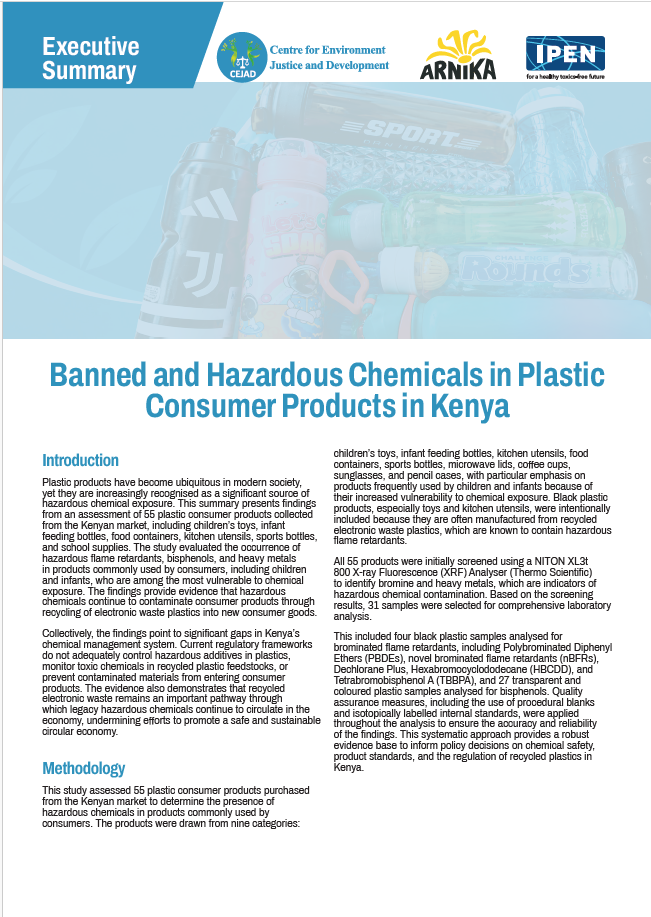

Plastic products have become ubiquitous in modern society, yet they are increasingly recognised as a significant source of hazardous chemical exposure. This summary presents findings from an assessment of 55 plastic consumer products collected from the Kenyan market, including children's toys, infant feeding bottles, food containers, kitchen utensils, sports bottles, and school supplies. The study evaluated the occurrence of hazardous flame retardants, bisphenols, and heavy metals in products commonly used by consumers, including children and infants, who are among the most vulnerable to chemical exposure. The findings provide evidence that hazardous chemicals continue to contaminate consumer products through recycling of electronic waste plastics into new consumer goods.
Collectively, the findings point to significant gaps in Kenya's chemical management system. Current regulatory frameworks do not adequately control hazardous additives in plastics, monitor the presence of toxic chemicals in recycled plastic feedstocks, or prevent contaminated materials from entering consumer products. The evidence also demonstrates that recycled electronic waste remains an important pathway through which legacy hazardous chemicals continue to circulate in the economy, undermining efforts to promote a safe and sustainable circular economy.