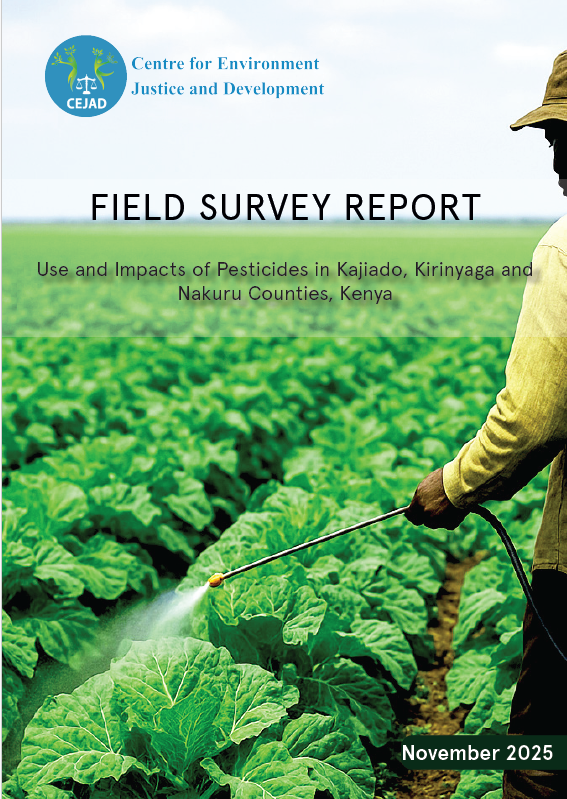

The study, conducted by the Centre for Environment Justice and Development (CEJAD), assessed pesticide use among 1,523 farmers and farm workers across three counties using a community-based monitoring approach. Findings show that nearly all respondents were exposed to pesticides, with over 30% of the products identified classified as highly hazardous. Fungicides and insecticides were the most commonly used.
Significant gaps were observed in training, use of personal protective equipment, safe disposal, and re-entry practices after spraying. Over one-third of respondents reported experiencing health symptoms linked to pesticide exposure, including skin irritation, headaches, dizziness, and breathing difficulties. Environmental risks were also noted, particularly harm to bees, aquatic life, and wildlife.
The report recommends stronger regulation, the phasing out of highly Hazardous Pesticides, Enhanced farmer training, the promotion of safer alternatives, and improved monitoring to protect human health and the environment.