
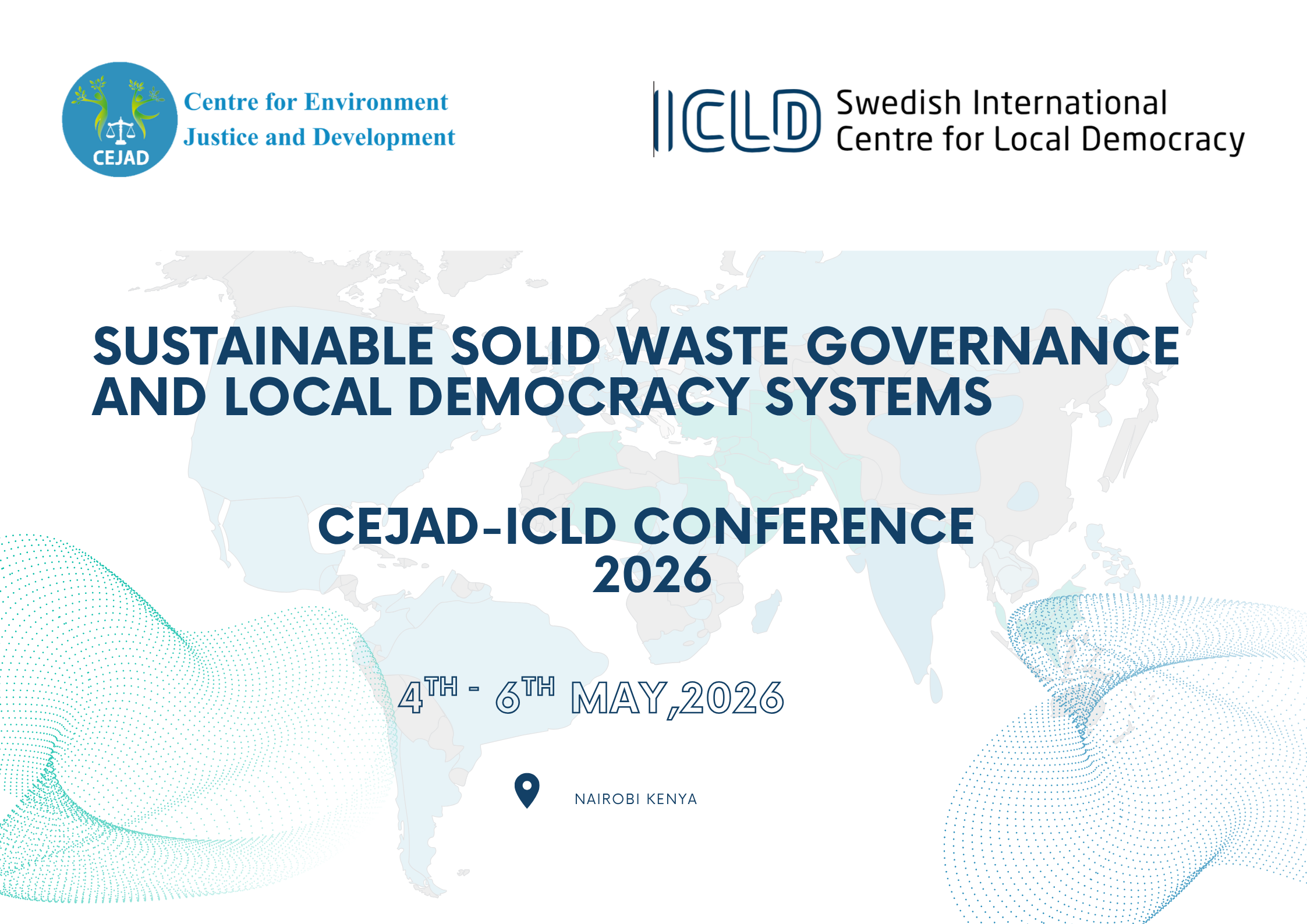
Location: Nairobi, Kenya
Kenya’s county governments are constitutionally responsible for waste management but face growing challenges due to rapid urbanisation, rising consumption, and strained budgets. Waste pickers informally fill critical gaps, highlighting how urban waste governance relies on grassroots actors.
Waste management is framed as a democratic issue; decisions about service delivery, labour recognition, and resource distribution require accountable, inclusive governance. Marginalised groups, especially waste pickers, must have meaningful participation in policy decisions.
Plastic waste poses severe environmental and economic threats, particularly in coastal and tourism-dependent counties, underscoring the need for effective and legitimate governance.
Although Kenya has enacted progressive laws like the Sustainable Waste Management Act (2022) and Extended Producer Responsibility (EPR) regulations, implementation is hampered by weak enforcement, limited resources, and poor coordination. A window of opportunity exists to embed fairness and participation into policy and practice.
Counties need practical tools to monitor waste, ensure accountability, and engage citizens. Research shows waste pickers and community groups drive innovation but are often excluded. Inclusive governance requires co-created platforms (e.g., democracy labs, participatory video) that treat these groups as co-designers, not just implementers.
The upcoming conference aims to bring together policymakers, researchers, civil society, and local governments to share actionable practices for just and democratic waste governance, to strengthen service delivery and deepen local democracy.
Objectives of the conference
- Knowledge Transfer: Share findings from the ICLD and CEJAD research on participatory solid waste governance and just transitions.
- Capacity Building: Equip local governments with practical tools (e.g. brand audits, participatory dialogue models, democracy labs) for more equitable solid waste management.
- Networking: Provide a platform for counties, the central government, and civil society to exchange good practices across Kenya and beyond.
- Cross-Learning: Explore parallels between solid waste governance and other areas of democratic climate adaptation, highlighting transferable practices (e.g. participatory forums, vulnerability analyses, inclusion of youth and marginalised groups).
- Policy Influence: Stimulate dialogue between local and national authorities to align county experiences with Kenya’s commitments under global plastic treaty negotiations.
Conference Themes
- Solid waste regulations and policies
- Extended Producer Responsibility (EPR) in Practice: Implications for counties and local waste systems.
- Building functional county waste systems: financing, governance, and evidence
- Meaningful participation, democracy and innovation in solid waste management
- Plastic waste and environmental justice
- Waste to value: Advancing a just circular economy across waste streams in Kenyan counties
- Looking into the future (short debriefing sessions)
Expected Participants
- County Governments, departments relevant to solid waste management
- Relevant national government ministries, departments and agencies
- Civil Society Organizations active in solid waste management and democratic governance
- Private sector players active in solid waste management
- ICLD staff and Alumni from outside Kenya
- Representatives from the Embassy of Sweden in Nairobi
- Representatives from the Embassy of Denmark in Nairobi
Expected Outcomes
- Enhanced the capacity of counties to implement inclusive plastic waste management strategies.
- Practical dissemination of research on a just plastic transition.
- Strengthened networks on democratic climate governance.
- Draft policy recommendations for institutionalising participatory platforms in county waste governance.
- Increased visibility of grassroots actors (waste pickers, youth, CBOs) as co-producers of solutions.
- Potential agreements for just waste management training to county governments and waste picker communities