
What happens to a banana peel after you throw it away in the same bin bag containing other trash, including metal scraps, electronics, plastics and more food scraps? In many cities, the bin bag would then be collected by municipal or private waste trucks and taken to a landfill or dumpsite, where it would be unloaded. Informal waste pickers then sort through the piled-up bin bags at these sites, recovering materials like plastics, metals, and paper, while most organic waste remains buried under layers of trash. The buried organic waste, encompassing food scraps like fruit peels, vegetable leftovers, fruit cores, and other food or agricultural residues, decomposes without oxygen in the dumpsite.
Over time, the breakdown of organic matter without sufficient oxygen supply releases methane, a greenhouse gas much stronger than carbon dioxide at warming the planet, and accumulates in landfills, creating fire and explosion hazards for workers and nearby communities. With organic waste making up about 65% of municipal waste streams in the landfill, landfills have become a major source of methane emissions, contributing substantially to global warming to date.
Additionally, the waste attracts pests such as flies, mosquitoes, and rodents, which can spread diseases like cholera, typhoid, and diarrheal infections. It also produces foul odours caused by gases like ammonia and hydrogen sulfide, which can also irritate eyes and lungs.
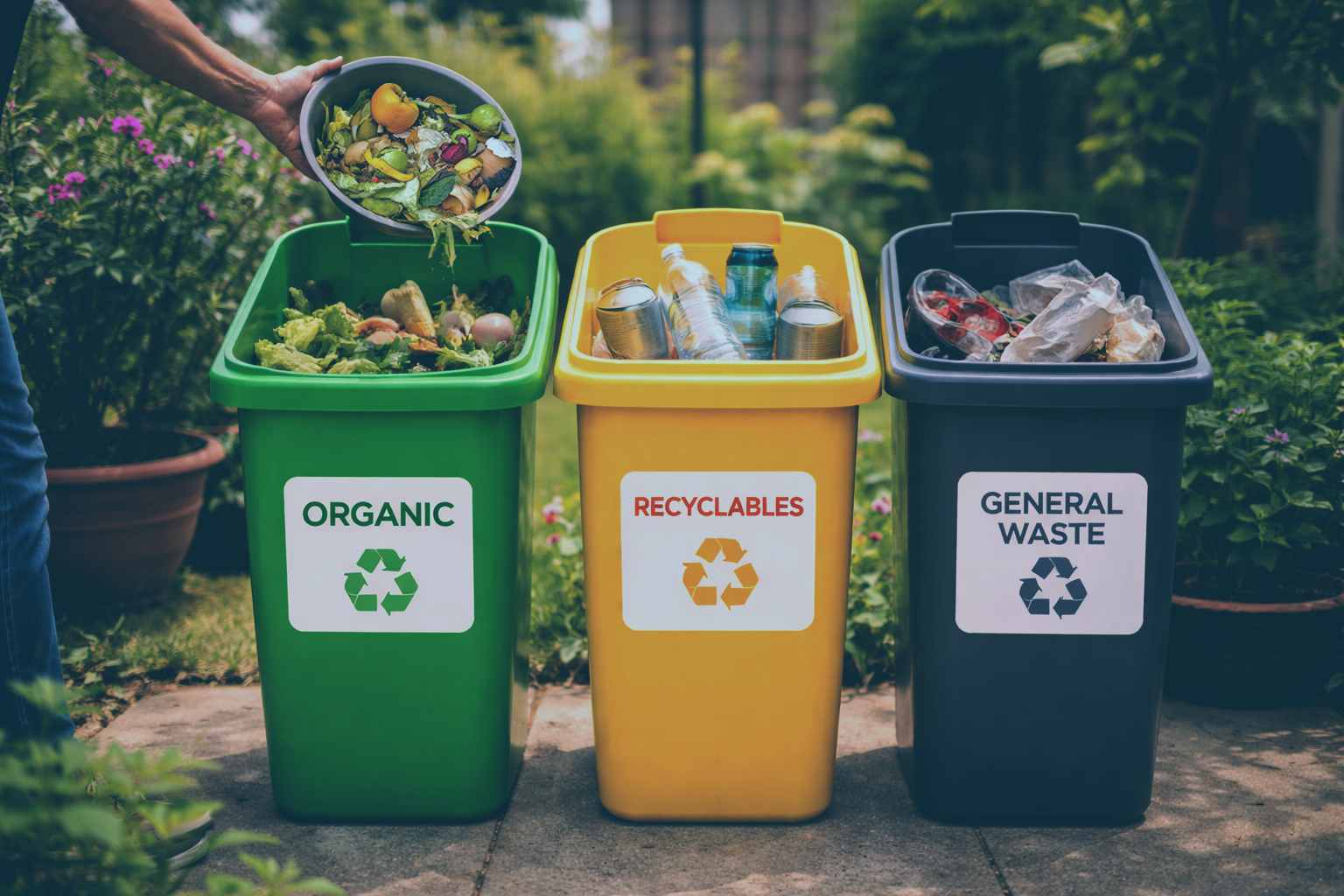
In an ideal waste management system, households, markets, and businesses should separate organic waste from other trash at the point of generation. Kenya’s Waste Management Regulations(2024) introduce a National Waste Colour Code, which requires waste to be segregated at the point of generation into three main categories using colour-coded bins. This system helps ensure that organic waste, recyclable materials, and residual waste are separated before collection by the waste collectors. By keeping organic waste separate from other waste, the organic matter can be collected and processed safely for composting, biogas production, or other circular economy uses. This is an untapped opportunity in addressing organic waste as one of the biggest waste management challenges today.
Waste pickers play a critical role in this system by supporting and reinforcing source separation initiatives. They can collect and transport separated organic waste to composting sites, community composting facilities or Material Recovery Facilities (MRFs), where the waste is processed into organic fertiliser instead of being dumped in landfills. (MRFs), Provide dedicated spaces and equipment to sort, separate, and process organic waste more efficiently, ensuring less is lost to landfills and more is transformed into useful products.
However, not all waste pickers are currently engaged in Organic Waste Management. Many focus on materials that have immediate market value, such as plastics and metals, which provide a direct source of income. Organic waste, by contrast, has often been overlooked because it has historically lacked clear economic incentives. This gap represents a significant opportunity: by attaching value to organic compost through supportive systems, market development, and targeted training, waste pickers could play a central role in promoting and facilitating the separation of organic waste at the source.
With their frontline experience and deep knowledge of waste streams, waste pickers are uniquely positioned to transform how organic waste is managed. They can help households, businesses, and communities properly separate food scraps and garden waste, ensuring it enters composting systems rather than mixed waste streams. Beyond environmental benefits, such as reducing methane emissions and improving soil health, this shift also creates tangible livelihood opportunities, allowing waste pickers to diversify their income while contributing to sustainable waste management.
Capacity building, therefore, becomes essential. By equipping waste pickers with knowledge on organic waste separation, safe handling practices and composting processes, it becomes possible to expand their role beyond recyclable recovery and methane emissions reduction. This not only strengthens waste management systems but also opens new livelihood opportunities within the growing circular economy. In many cases, organised waste picker groups can become key partners in community-based composting initiatives, helping transform what was once considered waste into valuable organic fertiliser.
This is the essence of zero waste: keeping materials in use by returning nutrients from organic waste to the soil, minimising landfill disposal, and turning waste into valuable resources.
So, what happens to that banana peel after you throw it away? In a system where waste is simply dumped, it becomes a source of methane emissions, environmental pollution, and health risks. But in a system where waste separation starts with you at the source, and waste pickers are recognised and supported, that same banana peel can become compost that nourishes soil, supports livelihoods, and reduces climate-harming emissions.