
CSOs call for the Implementation of Kenya’s waste management laws for a just transition.
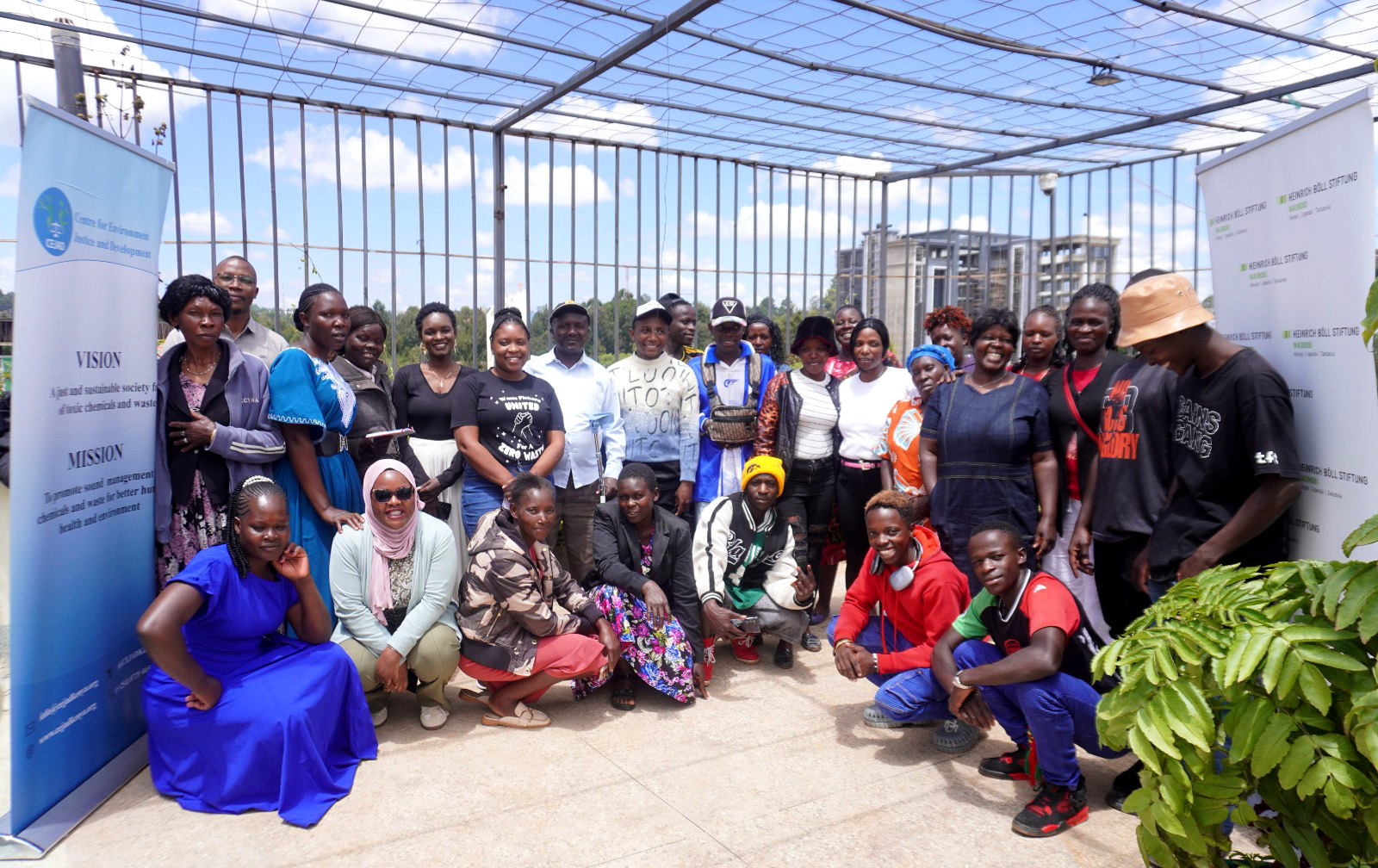
Nairobi, March 3, 2026 - Centre for Environment Justice and Development (CEJAD) and the Heinrich Böll Foundation (HBF) call for the implementation of Kenya's waste management laws and the integration of waste pickers to ensure a true, just transition for waste pickers that prioritizes their dignity, safety, and recognition. At a multi-stakeholder meeting in Eldoret, held in commemoration of International Day of Waste Pickers, Anthony Siteieni, CEC Environment, Uasin Gishu county, who officially opened the meeting, emphasized on the need for compliance with the law, especially among key actors in the waste sector.
“Today, I would like to sincerely thank waste pickers, CEJAD and all our partners and stakeholders for their collective efforts in keeping our county clean. Kisumu has shown that it is possible to build a cleaner, more organised and inclusive waste management system, and Uasin Gishu must follow this path,” said Mr. Siteieni. “Going forward, we must create an enabling environment that attracts responsible investment in the waste sector, strengthens recycling, and supports the production of organic manure. At the same time, I call upon all key actors in the waste value chain to fully comply with existing laws and regulations so that together we can build a sustainable, dignified and well-regulated waste management system for our County.”
Speaking at the meeting, Griffins Ochieng’, Executive Director at CEJAD, emphasized that the implementation of Kenyan waste management laws, such as the Sustainable Waste Management Act (2022) and Extended Producer Responsibility (EPR) regulations, are crucial for the well-being, recognition, compensation and just transition of waste pickers. Waste pickers are central to keeping Kenya’s cities clean and its recycling economy alive. Their work diverts vast amounts of waste from dumpsites and supports entire households and communities. However, this contribution remains largely unrecognised, and waste pickers continue to operate in precarious and unregulated conditions.
“Waste Pickers are still faced with significant challenges, like no compensation and poor working conditions, hence the need to put up Material Recovery Facilities(MRFs). To advance a truly just transition in Kenya’s waste sector, national and county governments, producers, and industry actors must formally recognise and integrate the voices of waste pickers into waste governance and deliberately plan for their integration into new waste management systems provided, such as the Sustainable Waste Management Act, 2022,(SWMA) and the Extended Producer Responsibility (EPR) regulations.”
The establishment of Material Recovery facilities (MRFs) would provide safer and more organised working
spaces, enable proper sorting and recovery of recyclables and organic waste, improve incomes through better material quality and market access, and significantly reduce health and safety risks for waste pickers.
The dialogue brought together the County Government of Uasin Gishu, Producer Responsibility Organisations (PAKPRO, KEPRO, EPROK), representatives from National Environment Management Authority (NEMA) and Uasin Gishu County Waste Pickers Welfare Association, providing a crucial platform for the waste pickers to share their experiences and priorities directly with policymakers, regulators, and industry actors. By participating in these forums, waste pickers gain a better understanding of Kenya’s waste management laws, including the responsibilities of key stakeholders in the waste management sector and the Extended Producer Responsibility (EPR) framework.
Agnes Akinyi Kisia, a spokesperson of the Uasin Gishu County Waste Pickers Welfare Association, urged the county government to include them in policy development of laws that concern the county level.
“We want to be recognised and respected for the work that we do at the county. Policies and systems designed without our participation risk sidelining us, marginalizing our contributions and undermining efforts towards sustainable waste management solutions. This work is how we take care of our families and earn a living. A collaboration with the county government for an inclusive waste management framework will benefit all of us,” emphasized Akinyi.
CEJAD and HBF continue to call for measures that place waste pickers at the centre of Kenya’s waste reforms, ensuring their rights, dignity, and recognition. Key priorities include:
- Redesigning products and packaging to reduce low-value and non-recyclable materials that worsen the pollution crisis, while promoting reusable products so that waste pickers can earn fair compensation after collection.
- Investing in Material Recovery Facilities (MRFs) as required under Kenya’s SWMA 2022 to create safer, cleaner, and more dignified working environments for waste pickers.
- Facilitating fair opportunities for waste pickers to sell recovered materials and access financial support, ensuring stable incomes and equitable participation in Kenya’s waste management economy.
- Inclusive integration of waste pickers into the EPR system, coupled with their active participation in policy dialogues and enhanced understanding of EPR laws, enables them to benefit from fair pay, recognition, and improved occupational safety.
As Kenya continues to confront plastic pollution, integrating waste pickers into policy design, multi-stakeholder dialogues, and the implementation of waste management laws is essential. While progress has been made, challenges remain, including inconsistent enforcement of regulations and limited county-level resources. Some stakeholders in government and industry have been slow to recognize the full value of waste picker inclusion, citing concerns related to formalization, competing interests, and existing contractual obligations. Acknowledging these barriers and recognising waste pickers' expertise, insights, and contributions ensures that solutions to plastic pollution are effective, inclusive, just, and sustainable.
Kenya can advance toward a non-toxic circular economy that benefits both the environment and its people's health. To achieve that, we must centre the inclusion of waste pickers in policy development. Waste pickers need to be empowered with knowledge of fair and just compensation, receive formal recognition, and be aware of laws that protect their health and safety in the workplace. Only then will a just transition be possible,” concluded Faiba Kombo, Programme Communication, Heinrich Boell Foundation.
📄 Download press release
—END—
Media Contact:
Candy Margaret Vizengwa, CEJAD, [email protected], +254 115614560