
FOR IMMEDIATE RELEASE!
Stakeholders Call for Urgent Reforms to Strengthen Inclusive and Accountable Waste Governance as Local Democracy Takes Centre Stage.
Nairobi, May 7th, 2026- Kenya’s waste management system is facing mounting pressure from rapid urbanization, rising consumption, and overstretched county government capacities. Stakeholders are now calling for urgent, coordinated action to build accountable and inclusive waste governance systems that reflect the realities on the ground. Discussions held during the ‘Sustainable Solid Waste Governance and Local Democracy Systems’ Conference, organized by Centre for Environment Justice and Development (CEJAD) and Swedish International Centre for Local Democracy (ICLD), underscored that effective waste governance must go beyond policy commitments: recognizing the critical role of waste pickers, and holding producers accountable for the waste they generate. By strengthening collaboration with grassroots actors and institutionalising their role, county governments can build more accountable, efficient, and equitable waste management systems.
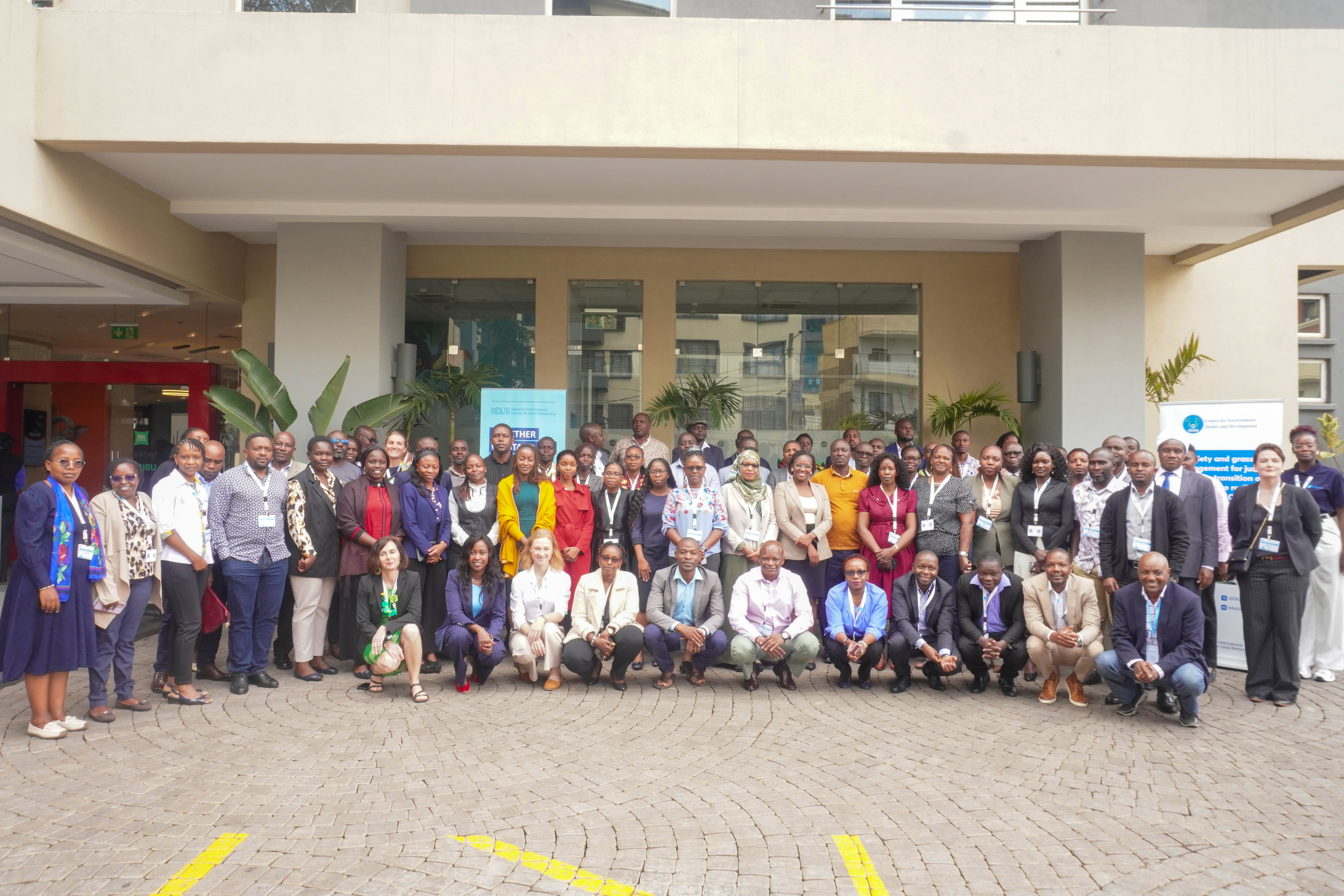
The three-day conference that brought together representatives of the National and County Governments of Kenya, Development Partners, Private Sector, Non-Governmental Organisations, Academia, Labour Organisations, and Waste Pickers took place from 4th-6th May, 2026, and was opened by Eng. Dr Festus Ngeno, Principal Secretary, Ministry of Environment, Climate Change and Forestry.
“Across Kenya, waste pickers contribute significantly to recycling, material recovery, and environmental protection. Yet, too often, they remain excluded from formal systems. It is this type of dialogue that helps us to highlight these exclusions and bring to the fore issues of a just transition to formality,” Dr Ng’eno stated in a speech delivered on his behalf by Molu Wato, Director of Waste Management and Pollution Control at the Ministry.
County governments are central to the integration of waste pickers, as they bear the constitutional mandate for waste management in Kenya and are best positioned to translate national policies into locally responsive, participatory systems that reflect realities on the ground. Research findings from the Centre for Environment Justice and Development (CEJAD) and Swedish International Centre for Local Democracy (ICLD), released during the conference, highlighted key lessons for advancing inclusive waste governance:
- Integrating grassroots actors into decision-making processes is central to advancing a just transition.
- Participatory tools such as Democracy Labs (community dialogue spaces that bring people together to openly discuss challenges and co-create solutions) and participatory video (where communities use film to share their experiences and explore issues) help foster more meaningful engagement between waste pickers, county governments, and other actors in the waste sector.
- These spaces help strengthen accountability, recognize the environmental contributions of waste pickers, and support more responsive and locally grounded waste governance systems.
Inclusive waste governance is fundamentally a democratic issue: it requires that those who contribute to service delivery are recognized, supported, and given a voice in how systems are designed and implemented.
“The Sustainable Waste Management Act and the Extended Producer Responsibility framework present a critical opportunity to transform Kenya’s waste sector. However, this transformation will only be meaningful if waste pickers are formally recognized and integrated into systems in ways that guarantee dignified and sustainable livelihoods. A just transition must ensure that those who have long driven recovery and recycling are not displaced but empowered.” Griffins Ochieng’, Executive Director at Centre for Environment Justice and Development (CEJAD).
The conference served as a practical reflection of the research findings, applying participatory approaches such as the World Café dialogue method to ensure that the voices of grassroots actors, including waste pickers, were meaningfully included in discussions and decision-making processes.
“Sustainable waste management is not only a technical challenge, but a question of local democracy in practice. When municipalities create space for dialogue, strengthen accountability, and invest in inclusive partnerships, they build systems that are more responsive, legitimate, and resilient. Platforms such as this conference are critical: they enable peer learning, amplify local solutions, and ensure that governance is shaped by those most affected,” Maria Jose Zapata, Research Director at the Swedish International Centre for Local Democracy (ICLD).
Key recommendations from the conference for advancing an inclusive and accountable waste governance system:
Local and national governments should:
- Ensure waste picker organizations are included in the design and Implementation of EPR frameworks and plastic regulation frameworks
- Establish long-term financial and logistical support for participatory spaces that require learning, unlearning and re-learning
- Local governments could formalize co-created spaces like democracy labs within waste governance structures, recognizing the importance of such spaces in supporting inclusive waste governance- Collaboration should be strengthened across national and county governments, the private sector, civil society, and researchers to drive coordinated and effective action.
- The implementation of Extended Producer Responsibility (EPR) should be strengthened to ensure producers take full accountability for the entire lifecycle of their products.
- Advancing inclusive governance by ensuring meaningful participation of communities and marginalized groups in decision-making processes
- Toxic-free circular economy approaches should be promoted, prioritizing reduction, redesign, reuse, and the elimination of toxic chemicals.
- Public awareness and education should be strengthened to support behaviour change and promote responsible waste management practices.
Download the press release here.
About CEJAD
Centre for Environment Justice and Development (CEJAD) is a Kenyan NGO promoting the sound management of chemicals and waste to protect human health and the environment, particularly for vulnerable populations. CEJAD is an accredited NGO to UNEP and actively advocates for eliminating toxic chemical exposure.
|Website: www.cejadkenya.org|
About ICLD
The Swedish International Centre for Local Democracy (ICLD) is a Swedish organization financed by SIDA, the Swedish International Development Cooperation Agency, with the mission is to promote the development of sustainable local democracy in order to create opportunities for people living in poverty to influence their living conditions.
Resources
- Towards a Just Transition in Plastic Governance: Grassroots Waste Pickers, Participatory Spaces, and Environmental Democracy in Kenya
- Sustainable Waste Management Act, 2022 -Simplified Version
- Extended Producer Responsibility Regulation, 2024- Simplified version