
FOR IMMEDIATE RELEASE
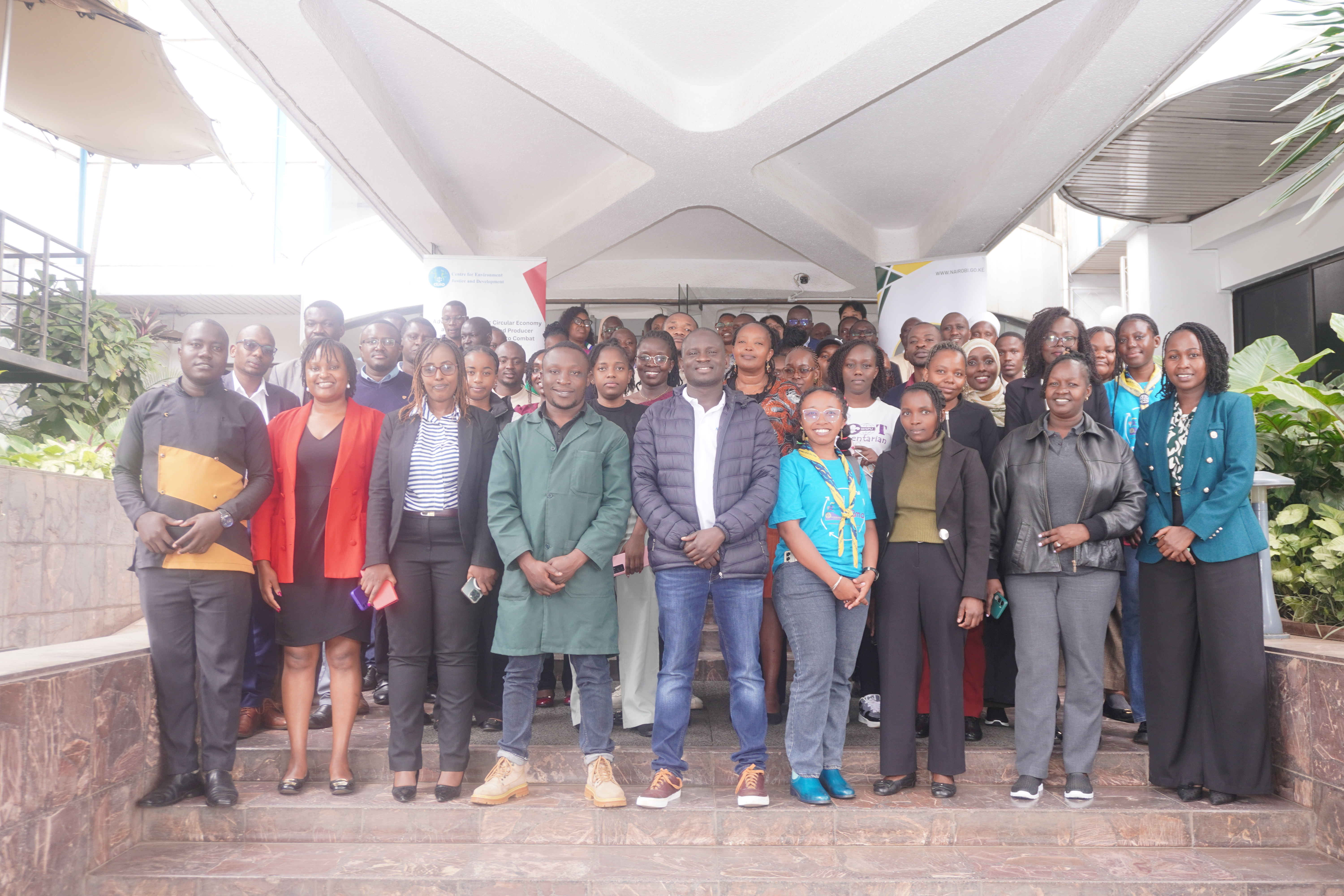
Nairobi, June 5th, 2026 - Stakeholders have highlighted sustainable and inclusive waste management, as well as effective implementation of the existing waste laws, such as the Extended Producer Responsibility (EPR) framework, as critical components of climate action and combating pollution in Nairobi County. Stakeholders further underscored the need for stronger collaboration, innovation, and inclusive approaches to address the city's growing waste management challenges and safeguard the people and the planet. The call was made during a multi-stakeholder forum co-convened by the Nairobi City County Government (NCCG) and the Centre for Environment Justice and Development (CEJAD).
The forum was held against the backdrop of this year's World Environment Day, which calls for accelerated climate action to address the urgent environmental and climate challenges facing communities around the world.
“Waste management is a shared responsibility. The national and county governments, communities, private sector actors, Producer Responsibility organizations and waste pickers all have a critical role to play in building sustainable waste management systems and enhancing the county’s resilience to environmental and climate-related challenges.” she said. “Addressing the challenges we face requires stronger collaboration among all stakeholders,” Christine Mwende Kivuva, Assistant Director for Environmental Monitoring, Compliance and Enforcement at NCCG, speaking during the forum.
Kivuva noted that Nairobi, like many rapidly growing cities, continues to face increasing challenges in solid waste management. Her remarks reflect the broader reality of Nairobi’s rapidly evolving urban landscape, where increasing waste generation, pressure on infrastructure, and changing weather patterns are combining to heighten environmental and climate-related risks.
Griffins Ochieng’, Executive Director at CEJAD, highlighted that waste management challenges have far-reaching implications, particularly for communities most exposed to pollution and climate-related risks.
“The impacts of poor waste management are not experienced equally. Communities living near dumpsites, waste workers, women, children, and low-income households often face the highest exposure to pollution and its health consequences,” he said.
He further noted that organic waste remains one of the most significant yet under-addressed contributors to greenhouse gas emissions. When disposed of in dumpsites, organic waste decomposes and releases methane, a powerful greenhouse gas that accelerates climate change. He explained that waste segregation at source and zero-waste approaches such as composting present practical opportunities to significantly reduce methane emissions, which contribute substantially to global warming.
Shifting toward a non-toxic circular economy and zero waste systems, where waste is minimized and materials are recovered and reused, presents a sustainable alternative that operationalizes existing waste management laws, including the Extended Producer Responsibility (EPR) framework, while reducing environmental pollution, improving resource efficiency, and advancing climate action.
Speaking on the county perspectives at the forum, Lawrence Mwangi, Assistant Director of Environment at NCCG, noted that Nairobi County is developing a Sustainable Waste Management Policy to align with national policy and legal frameworks, and strengthen waste management in the city. He called on all stakeholders to partner with the county in actualizing the policy and advancing sustainable waste management solutions.
The forum underscored that Nairobi's transition toward sustainable waste management is not only an urban governance priority but also a critical component of Kenya's broader climate, pollution reduction, and sustainable development agenda.
Key Priorities for Collaborative Climate Action to Tackle Pollution and Climate Change include:
- Strengthening waste segregation at source across households, institutions, and businesses;
- Expanding investment in organic waste management, composting, and resource recovery systems;
- Scaling up sustainable infrastructure and circular economy value chains, including innovative approaches such as Black Soldier Fly (BSF) technology;
- Recognizing, formalizing, and integrating waste pickers into waste management systems, as equal partners, ensuring their meaningful participation in decision-making processes;
- Implementing the waste management laws and ensuring compliance with the regulations; and
- Strengthening public awareness, community participation and behavior change initiatives on waste prevention, reduction and management.
About CEJAD
Centre for Environment Justice and Development (CEJAD) is a Kenyan PBO promoting the sound management of chemicals and waste to protect human health and the environment, particularly for vulnerable populations. CEJAD is an accredited NGO to UNEP and actively advocates for eliminating toxic chemical exposure.
|Website: www.cejadkenya.org|
About the Nairobi City County Government
The Nairobi City County Government (NCCG) is mandated to provide public services and promote sustainable development within Kenya’s capital city. Through its Green Nairobi sector, the County oversees functions including solid waste management, environmental conservation, pollution control, and climate change, while working to improve environmental management and service delivery for city residents.
https://nairobi.go.ke/about-nairobi
Comment(s)
Excellent efforts to combat…
Excellent efforts to combat waste management through legislation and communities involvement. Scaling up the projects will work for the big City. Good work cejad.